
Short Bio
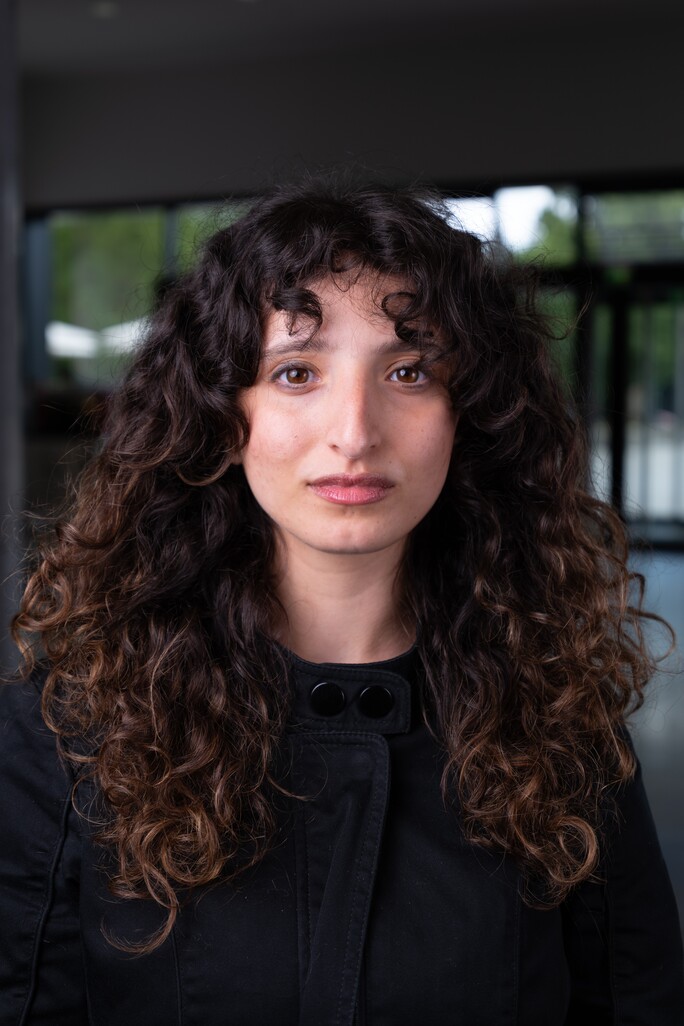
Karma Abudagga is a doctoral researcher in the Fixing Futures RTG. Her research focuses on seed sovereignty and commoning practices, exploring sites of reclamation as future-making praxis. She holds a Master’s degree in Science & Technology Studies. She is also the cofounder of the Inbetween Collective and a member of the Palestinian Sound Archive, engaged in decolonial storytelling through multimedia approaches.
Project description
In today’s capitalist economies, mechanisms of dispossession continue to evolve, finding new ways to commodify, appropriate, and extract. One manifestation of this is seed enclosures, driven by intellectual property regimes, multiscalar legal frameworks, and the monopolization of industrial agriculture. This led to the restriction in farmers’ rights to save, exchange, and regrow seeds. As a result, practitioners and farmers across the globe continue to call for and work towards seed sovereignty, broadly defined as the right of a farmer to save, use, exchange and sell their own seeds. In working towards seed sovereignty, practitioners have been establishing seed commons; seed activists use the language of the commons, but there remains contestation on how to enact a seed commons, especially regarding ownership, management, and accessibility. Hence, I embark on this research to trace how varied actors enact seed commons to deepen our theoretical, conceptual, and practical understanding of them.
Through a multi-sited ethnography focused on Palestinian seeds, I will trace how different actors, ranging from seed savers to activists, local cultivators to agronomists, plant geneticists to legal advocates, farmers to knowledge keepers engage with and work towards seed commons. Scholars and practitioners alike have stressed that food sovereignty is not possible without seed sovereignty, hence this struggle sits within and alongside other struggles. Focusing on the (forced) interplay between place-based knowledge systems and the hegemony of neocolonial governance, I begin by asking, whose futures (epistemic and material) are fixed and whose futures are negated through seed enclosures? How do indigenous and local communities use seeds to resist colonial erasure, past and present? This doctoral project explores seed commons as sites of epistemic reclamation by local and indigenous communities, but also as sites of generative dissent (Hernandez Vidal and Moore).