
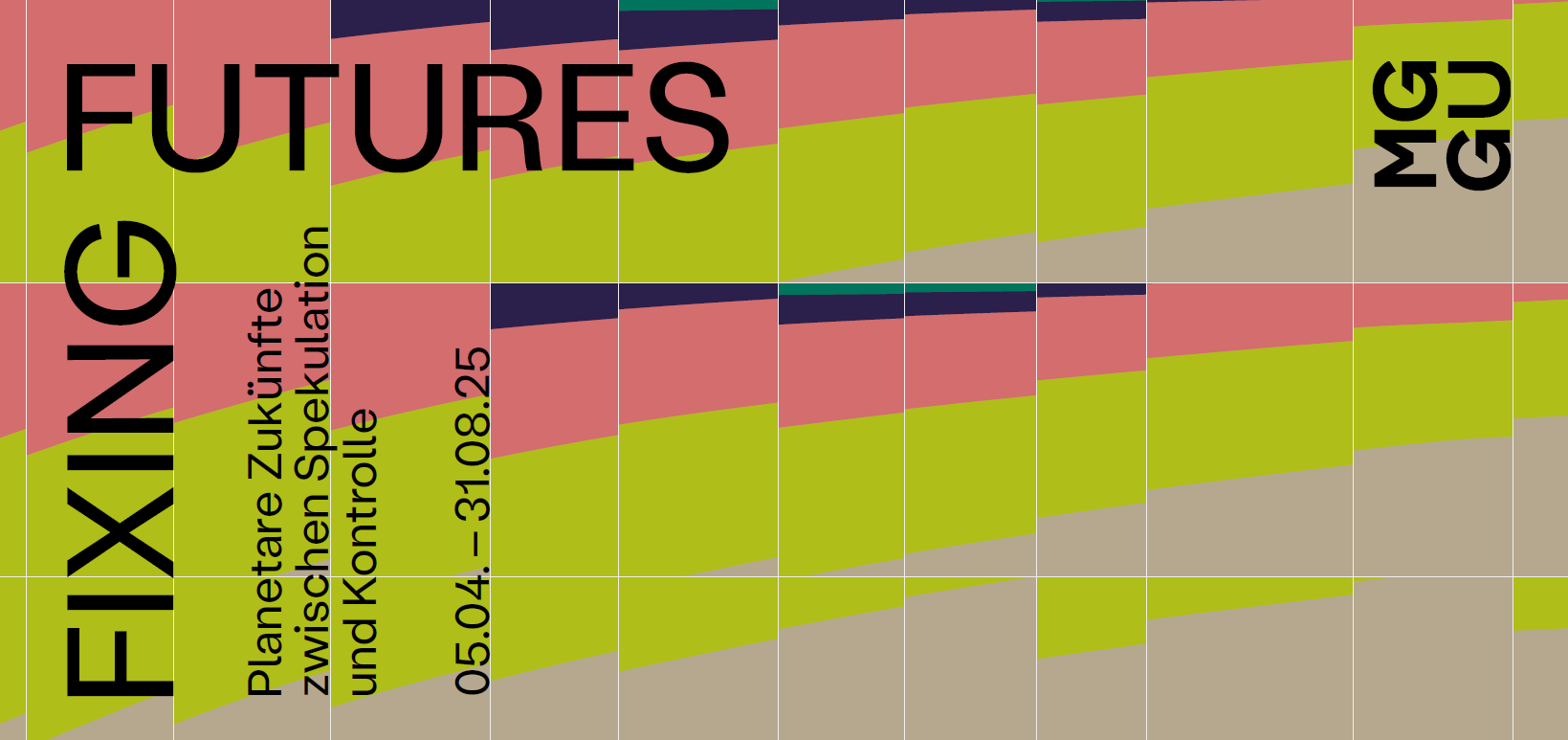
A Review of the Exhibition ‘Fixing Futures: Planetary Futures between Speculation and Control’
The climate crisis is already here and keeps escalating: scientists confirm it, activists march against it, the media report on it, and politicians debate it. Widespread future narratives about this crisis range from climate collapse to green capitalism to calls for system change, and they frame the future as either foreclosed, to be secured, or still to be won. The overlapping crises of our time challenge our imagination again and again: What kind of future are we heading toward? What can we still hope for? Is catastrophe inevitable? Who gets to shape the future, and who doesn’t? And what futures do new technologies promise to open up? The exhibition “Fixing Futures: Planetary Futures between Speculation and Control”, held last year at the Museum Giersch of Goethe University (MGGU), was dedicated to these questions, presenting international artistic and scientific visions for actively shaping our futures (MGGU 2025). In this blog post, we look back at the exhibition – its contributions, debates, and the questions it raised. We do so with the conviction that the negotiations and experiences it opened up remain relevant and that, in light of the worsening climate crisis and the concentration of power in tech corporations pushing their own visions of the future, they are more pressing than ever.
© Joshua Wodak
I. From a Research Program to an Exhibition
The exhibition shares its title with our Research Training Group “Fixing Futures. Technologies of Anticipation in Contemporary Societies,” and that is no coincidence: our postdocs Julia Schubert and Steven Gonzalez served as the exhibition’s academic advisors, shaping it from its earliest stages. They helped conceptualize its themes, inviting artists and designing both the venue and the accompanying program. As a science fiction author, Gonzalez has explored various visions of the future through his writing; in his anthropological work on data centers, he has likewise examined how technology shapes some futures while foreclosing others. Schubert has explored the history of futurology since completing her bachelor’s degree — tracing the tools and efforts through which science and society have sought to grasp, measure, and prepare for the future. She now works on the history and sociology of climate research, a field similarly concerned with predicting and understanding what is to come. In the Research Training Group, both examine how “anticipatory technologies” stabilize and repair competing visions of the future and, crucially, which forms of life they protect or exclude.
Gonzalez and Schubert were present in the exhibition not only through their conceptual work but also in their own voices. For the exhibition, the curators interviewed Gonzalez and Schubert, as well as other artists and scientists. Excerpts from the conversations appeared in videos that guided visitors through the show. In the bilingual catalog, edited by Gonzalez and Schubert, curator Laura Domes, MGGU director Ina Neddermeyer, and postdoc Tim Pickartz, these discussions were developed further, giving contributors space to explain the exhibition’s key concepts.
Schubert wrote an essay critically examining the political logic and risks of geoengineering—the attempt to counter climate change by intervening in geophysical processes—and the unpredictable consequences of such interventions. Gonzalez contributed an essay on data storage, tracing a line from culturally rooted storage techniques of the past to the ecological costs of today’s digital infrastructure and possible future technologies. During the Long Night of Museums, he also led a “World-Building Workshop,” where participants used drawings and texts to construct a fictional world and read from his sci-fi book Sordidez. Doctoral researchers from the RTG also contributed essays connecting their research to the exhibition: In “Weather & Climate Control,” Beste İrem Köse traced the historical and ongoing hope of controlling weather and climate through technology. Naomi Bi’s essay “Global Environmental Problems” examines how climate change, biodiversity loss, and environmental pollution have continued to worsen despite various efforts to address them.
II. On Thinking, Imagining and Shaping Futures
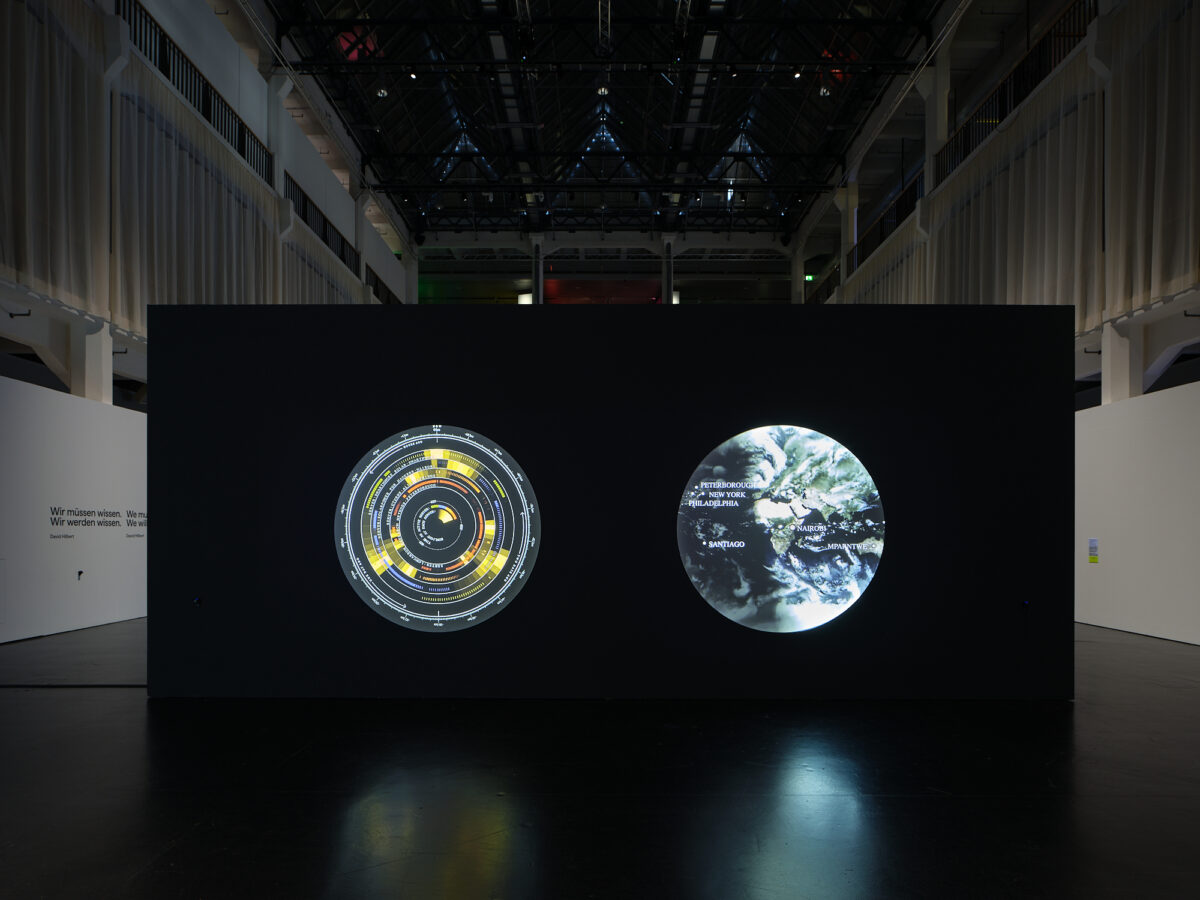
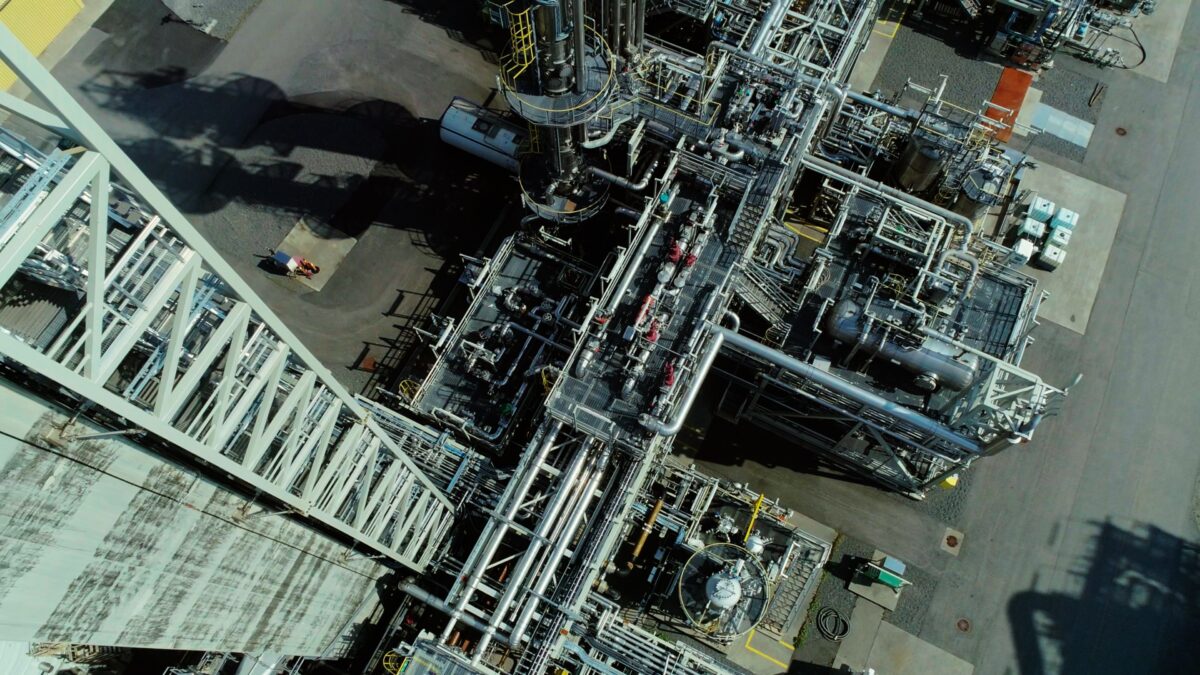
Walking through the museum, visitors encountered videos, installations, soundscapes, interactive programs, games, and films spanning science, art, and activism to imagine alternative futures. The exhibition began by examining our crisis-ridden present, marked by emerging global environmental problems, biodiversity loss, and resource scarcity. It then turned to highly speculative efforts to control climate change in the future. Throughout, it asked how technology can make the future predictable—or even promise a “fixed” one—and critically explored the entanglement of digital and environmental spaces, including the potential role of algorithmic modeling in addressing the climate crisis. Colin Lyons’s graphic series “We Will Find Salvation in Strategic Chemical Spills” illustrated this by exploring geoengineering proposals such as a planetary sunshade or injecting sulfur particles into the stratosphere. In another video work, Oliver Ressler examined the world’s largest facility for CCS (Carbon Capture and Storage) technologies, addressing the technological challenges, political promises, the fossil fuel industry’s involvement, and the climate protests surrounding this strategy. The exhibition also confronted visitors with dystopian futures, as in “Chronicles of the Dark Sun,” where Gwenola Wagon imagined an Earth turned into a desert and a dimmed sun as an attempt to stop climate change. By contrast, Tega Brain’s presentation from the Solar Protocol network pointed to new, collective approaches through technology.
Installationsansicht Renaissance 3.0 im ZKM | Karlsruhe, 2023.
© ZKM | Zentrum für Kunst und Medientechnologie Karlsruhe. Foto: Tobias Wootton
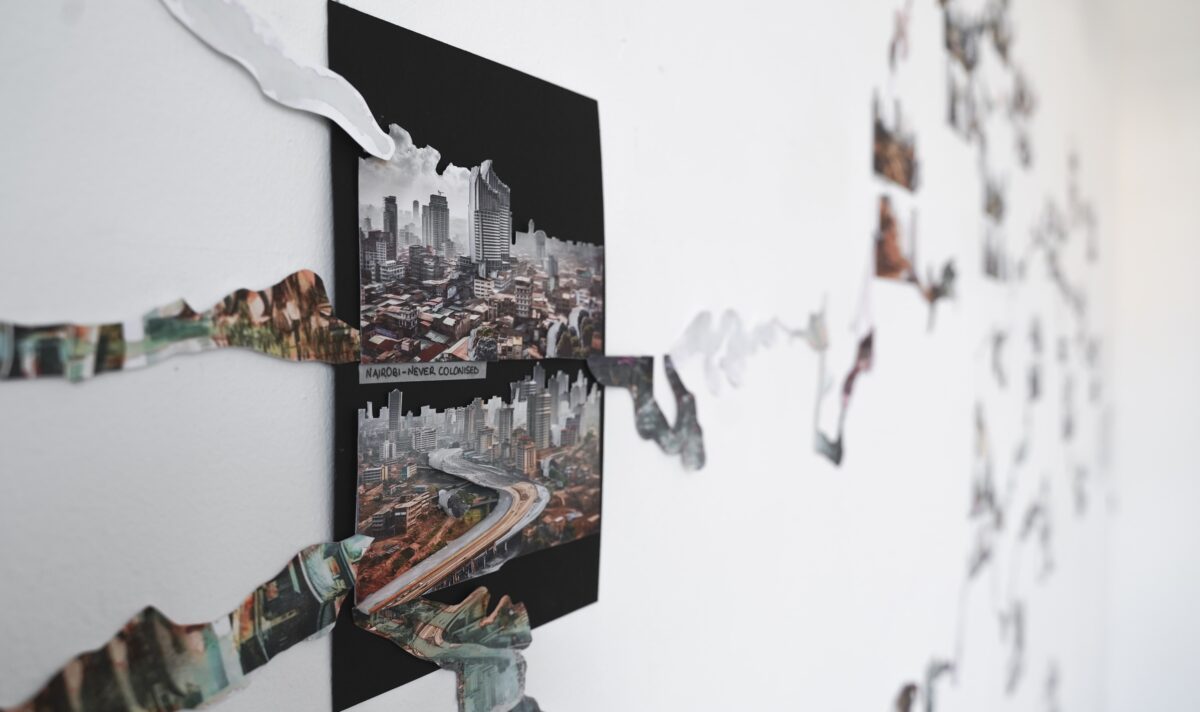
Another important feature of the exhibition—and one that stood out in the German museum landscape—was its focus on placing decolonial perspectives at the center, imagining alternative futures, and developing more equitable ways to shape them. Adhavan Sundaramurthy developed architectures for alternative, postcolonial futures under the label “Tamizh Futurism”. He exhibits 3D-printed sculptures inspired by the grammar of Tamil, one of the oldest surviving classical languages, alongside the wallpaper design ‘Karu’ (Tamil for ‘seed’, ‘core’ or ‘womb’), which draws on Dravidian temple architecture. Another example is IWAPO, an installation by Jordan Rita Seruya Awori, in which visitors entered a dark room where images of winding, intertwining cities appeared on the walls, linked by various paths. The speculative cityscapes were designed using an AI program to imagine what cities and their histories might look like today without colonial influence, or how a different colonial order might have shaped the urban landscape.
© Jordan Awori
III. The symposium ‘Seeing the Unforeseeable: Art, Science, and the Imagination of Futures’
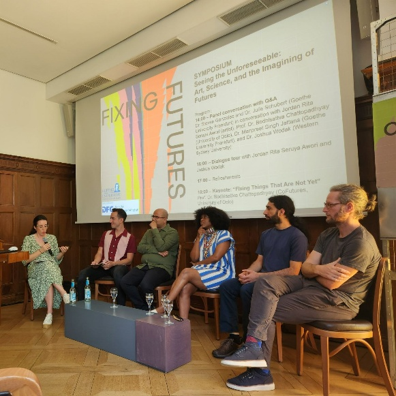
A further exhibition highlight was the symposium „Seeing the Unforeseeable,“ which explored how artistic, scientific, and technological approaches intersect and challenge one another. On a hot June afternoon, the MGGU, hosted the event in its stately chambers. Fixing Futures postdocs Julia Schubert and Steven Gonzalez, who organized the afternoon, opened with remarks on the relationship between control and speculation, and between anticipation and imagination of the future. Speculation and imagination suggest creativity and openness about the future, while anticipation and control point in the opposite direction, toward a future that is fixed and inevitable. This distinction matters: whether the future remains open or becomes closed is an especially urgent question in a time of accelerating technological change and climate disaster. The gravity of that question was underscored quite literally by the heat slowly building in the room as the symposium went on.
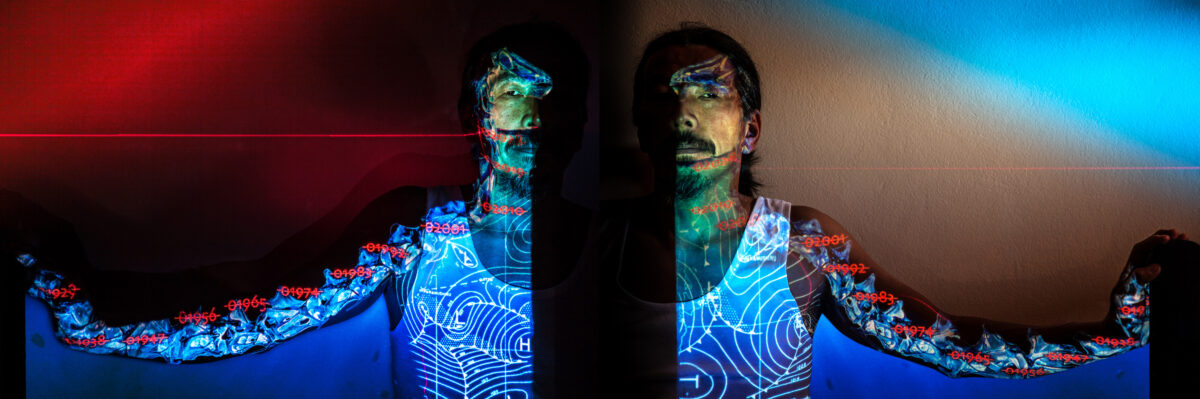
What kind of future lies ahead, which technologies will shape it, and whether it can be controlled remain open questions. The panel explored these questions, examining how the present and long-standing continuities shape the future—and how the tools we use to make it governable also shape our sense of what is likely to come. It brought together the artist Jordan Rita Seruya Awori (Frankfurt) mentioned above; Prof. Dr. Bodhisattva Chattopadhyay, Professor of Global Culture Studies at the University of Oslo and PI at CoFutures, who researches global imaginaries of the future; Dr. Joshua Wodak (Sydney), a researcher, writer and artist exploring what it means to live in unstable times; and Dr. Manpreet Singh Jattana (Frankfurt), a quantum computing researcher.
The following discussion explored the roles of art and science in imagining alternatives. The climate crisis shaped the conversation as both a subject and a lived experience: How can we describe the future as open when climate damage is already so acute and irreversible? Why insist that it remains open, and what does that have to do with justice? The conversation was compelling because artists and scientists brought different sensibilities to the issue, especially in their views on whether climate catastrophe has already closed off the future. The scientists on the panel tended to see the future as more closed, while the artists argued that it remains open and that creativity and imagination can help shape it.
Joshua Wodak and Jordan Rita Seruya Awori, artists and panelists contributing to the exhibition, led an ‚artist talk‘ through the exhibition. They highlighted how the panel’s topics are explored in the exhibition, giving visitors a chance to hear the artists discuss their work, share the ideas and processes behind it, and answer questions. After a short break, the symposium concluded with a keynote by Prof. Dr. Bodhisattva Chattopadhyay. He examined what it means to fix or repair something that does not yet exist, and how our practices might shape the future in the process, contrasting two modes in particular: planning and fiction. The symposium ended on that note: the importance of continuing to imagine, and of turning those imaginings into strategies for actually shaping the future.
IV. Open Futures, Ongoing Debates
So, what remains one year after the exhibition? Any answer can only be a rough sketch. The exhibition itself has ended for now, but much of what it set in motion continues. We cannot know how many hearts and minds the debates and interactive formats have reached, or what conclusions visitors will draw from them for the future—though we can hope. Ideally, the exhibition highlights a particular way of thinking about the future: as something open, repairable, and malleable, something that can and must be shaped collectively. The debate also lives on, as we experience ourselves within the RTG ‚Fixing Futures.” Yet it extends beyond the RTG: negotiations over the future are visible everywhere in public discourse. Beyond that, many relationships endure: new encounters and renewed acquaintances that grew out of the exhibition’s creative process and visits. Finally, a methodological insight persists: exhibitions can be places where art and science genuinely interact, and a tool that is already being carried forward:
This year, another exhibition, again organized in collaboration with ‚Fixing Futures‘, was running at the MGGU until September 2026: “Multispecies Members Club. New alliances between living and artificial systems”. It asks how a technologized society might be built on care and participation rather than competition. Starting from the close interdependence of society, humans, nature, animals, and technology, the exhibition continued some of the debates opened by ‚Fixing Futures‘: For example, that technology is not neutral; it can reinforce power relations, but it can also call them into question. New societies, in which technology serves not power and exploitation but care and participation, can be imagined and shaped.

Produktion mit Unterstützung von Hangar Y, in Zusammenarbeit mit dem Observatorium Paris-PSL
© Gwenola Wagon
Finally, what remains is the political relevance of the topics and questions brought up. The insistence that things could be otherwise matters because we live in times when the future feels out of reach: We witness wars cutting off entire futures, the climate crisis feeds a fatalism that declares the future lost anyway, and right-wing parties attract with visions of an old, supposedly better past. Against this backdrop, there is something emancipatory in insisting that the future is open – that it can not only be fixed, but actively shaped, and not by a select few, but by all of us.
A blog post by Johanna Fankel.
IV. For further reading
Condé, E. G. (2023). Sordidez. Stelliform Press.
Domes, Laura / Gonzalez Monserrate, Steven / Neddermeyer, Ina / Pickartz, Tim / Schubert, Julia (Hrsg.) (2025): Fixing Futures. Planetare Zukünfte zwischen Spekulation und Kontrolle (Katalog zur Ausstellung), Berlin: Neofelis Verlag,ISBN 978-3-95808-458-2. Online: Fixing Futures | Neofelis Verlag
Schubert, Julia (2023). Climate Engineering: Sozialwissenschaftliche Perspektiven auf eine Emerging Technology. In: Handbuch Umweltsoziologie, edited by Marco Sonnberger, Alena Bleicher, and Matthias Groß. Springer Fachmedien Wiesbaden. https://doi.org/10.1007/978-3-658-37222-4_35-1.
Schubert, Julia / Gonzalez, Steven (2025): Zukunftsvisionen in Zeiten der Krise. Ein Gespräch über die Ausstellung »Fixing Futures«, In: AStA Zeitung, Online:https://asta-zeitung.de/artikel/zukunftsvisionen-zeiten-der-krise
MGGU – Museum Giersch der Goethe-Universität (2025): Fixing Futures (Ausstellungsseite), Frankfurt am Main, Online: https://www.mggu.de/ausstellungen/fixing-futures/
MGGU – Museum Giersch der Goethe-Universität (2026): Multispecies Members Club (Ausstellungsseite), Frankfurt am Main, Online: https://www.mggu.de/ausstellungen/multispezies-members-club-neue-allianzen-zwischen-lebendigen-und-kuenstlichen-systemen/
4K Video, 33 min
Courtesy of the artist; àngels, Barcelona; The Gallery Apart, Rome © VG Bild-Kunst, Bonn 2025